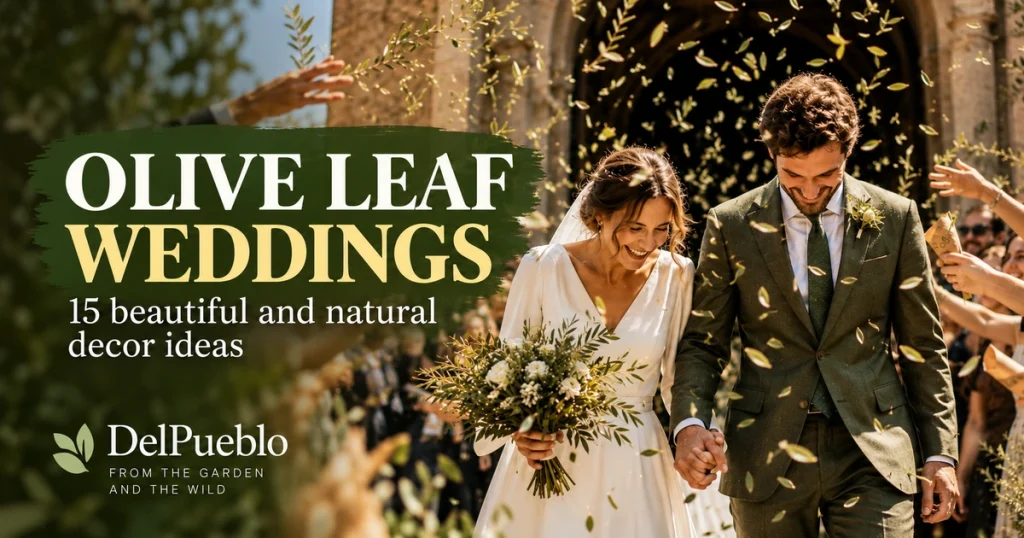
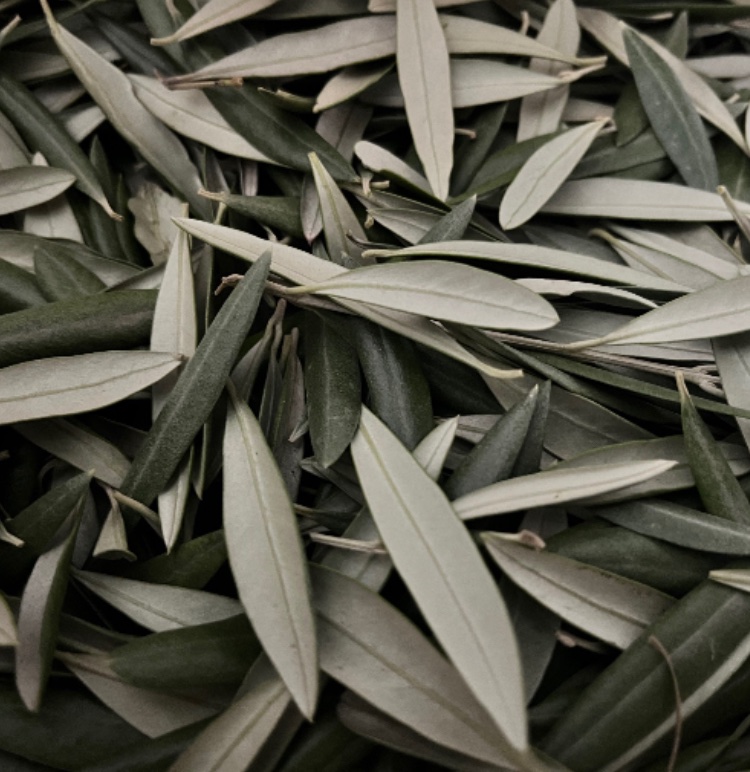
Olive leaf wedding decor is a simple and elegant way to bring the beauty of the Mediterranean landscape into a celebration. With their soft green upper surface, silvery underside and naturally varied shapes, olive leaves work especially well in rustic, countryside, outdoor and Mediterranean-inspired weddings.
They can be used as natural confetti, scattered across tables, tied to napkins, added to place cards or arranged around candles, flowers and wedding signs. They create a refined result without making the decoration feel artificial or overloaded.
In this guide, we share 15 beautiful ways to use olive leaves at a wedding, together with practical advice about quantities, preparation, venue rules and storage before the event.
Why use olive leaves for wedding decoration?
Olive leaves have a restrained and timeless appearance. They do not need strong colours or complicated floral arrangements to stand out. Their natural green and silver tones combine beautifully with:- White and cream flowers.
- Linen and natural fabrics.
- Wooden tables and rustic furniture.
- Terracotta and handmade ceramics.
- Kraft paper and recycled card.
- Glass jars and bottles.
- Gold, brass or copper details.
- Candles and warm lighting.
- Lavender, rosemary and other Mediterranean plants.
What do olive leaves symbolise at a wedding?
The olive branch has long been associated with peace, prosperity and the Mediterranean world. Olive wreaths were also connected with honour and victory in ancient Greece. For a wedding, olive leaves can represent peace, harmony, commitment and the beginning of a shared life. Couples may choose them for their symbolism, their Mediterranean origin or simply because they appreciate their natural appearance. There is no need to force a particular meaning. Their greatest value may simply be that they are real leaves from a real tree, bringing part of the countryside into the celebration.15 olive leaf wedding decor ideas
1. Natural olive leaf wedding confetti
Fresh olive leaves can be used as a natural alternative to paper or plastic confetti. Guests can throw a small handful as the couple leaves the ceremony. The green and silver leaves create beautiful movement in photographs and work particularly well at outdoor ceremonies, rural venues and Mediterranean weddings. Always ask the venue before ordering natural confetti. Some venues allow flower petals and leaves but prohibit all forms of confetti, while others have specific cleaning or environmental rules.2. Handmade confetti cones
Olive leaves can be placed inside small paper cones and handed to guests before the ceremony exit. The cones can be prepared using:- Kraft paper.
- Old book pages.
- Recycled card.
- Plain white paper.
- Paper printed with the couple’s names and wedding date.
3. Olive leaves scattered across wedding tables
One of the easiest options is to scatter individual leaves along the centre of the table. They can be placed loosely between candles, flowers, bottles and tableware. This works particularly well on long banquet tables. The leaves create continuity along the table without requiring a large floral centrepiece. For a clean and elegant result, use fewer leaves and leave visible space between them. For a fuller rustic appearance, create a denser line through the centre.4. Olive leaf table runners
A natural table runner can be created with loose olive leaves, small branches or a combination of both. Place them along the centre of the table and add candles, white flowers, small figs, grapes, pomegranates or ceramic bowls. The result can feel Mediterranean without needing elaborate decoration. Make sure that the leaves do not block plates, glasses or serving dishes. Wedding tables need to remain practical as well as attractive.5. Olive leaves on individual place settings
A single olive leaf placed on each plate or napkin is a subtle and affordable detail. It can be combined with:- A printed menu.
- A name card.
- A linen napkin.
- A piece of natural string.
- A wax seal.
- A small handwritten message.
6. Napkin decorations
One or two olive leaves can be tied around a folded napkin using fine string, raffia or ribbon. For a more Mediterranean effect, combine the leaves with a small sprig of rosemary or lavender. Keep the arrangement simple so guests can remove it easily when they sit down.7. Olive leaf place cards
Olive leaves can be incorporated into handmade place cards. Write or print each guest’s name on a small piece of card and attach one leaf using string, paper tape or a small decorative clip. Another option is to place the name card directly over a small group of leaves. This adds texture without having to write on the leaf itself.8. Wedding invitations and flat-lay photography
Olive leaves are useful for styling invitations, rings, perfume bottles, ribbons and other small objects before the ceremony. Photographers often create flat-lay compositions using the invitation suite and meaningful details from the wedding. A few olive leaves help connect those photographs with a rural or Mediterranean theme. Keep several clean, well-shaped leaves aside specifically for photography before using the rest of the order.9. Welcome signs and seating plans
Olive leaves can be placed around the edges of welcome signs, seating plans and table lists. They look especially effective with:- Wooden signs.
- Mirrors.
- White painted boards.
- Handmade paper.
- Terracotta pots.
- Natural fabric panels.
10. Ceremony aisle decoration
Small groups of olive leaves can decorate ceremony chairs, aisle markers or the ends of benches. They may be used alone for a minimalist style or combined with white flowers, candles and natural fabrics. Even a small olive detail repeated along the aisle can create a consistent visual theme. For outdoor ceremonies, secure the leaves properly so they are not displaced by the wind before guests arrive.11. Wedding arch and ceremony backdrop
Olive foliage can be included in a wedding arch, doorway or ceremony backdrop. Individual leaves are useful for filling small spaces, while olive branches provide more volume and structure. For large installations, work with a florist or wedding stylist who can calculate the amount of material and fix it safely. Loose leaves alone are better suited to detailed decoration than to constructing an entire arch.12. Bouquets and buttonholes
Olive leaves can complement bridal bouquets, bridesmaid flowers, buttonholes and small corsages. The silvery underside creates contrast around white, cream, yellow, pink or purple flowers. Olive foliage also pairs naturally with lavender, rosemary and eucalyptus. For bouquets and buttonholes, branches with stems are usually more practical than loose leaves because florists need a secure point for arranging and wiring the foliage.13. Wedding favours and guest gifts
A small olive leaf can be tied to each wedding favour as a natural finishing detail. It works particularly well with:- Small bottles of olive oil.
- Jars of honey.
- Handmade soap.
- Packets of seeds.
- Small candles.
- Personalised fabric bags.
- Handwritten thank-you notes.
14. Wedding cake decoration
Olive leaves can be arranged around a wedding cake stand or used by a professional cake designer as part of the presentation. However, decorative leaves should not automatically be placed in direct contact with an edible cake. Speak to the baker first and use a suitable food-safe barrier, floral pick or cake decoration method. The leaves should be clean, dry and kept away from candles, sparklers or open flames.15. Decorative baskets and ceremony displays
Olive leaves can fill baskets placed near the ceremony exit, guest book table, welcome area or confetti station. A shallow basket filled with loose leaves creates an abundant natural display and allows guests to take a handful. Smaller baskets can be combined with signs explaining how and when to use the leaves. They can also be mixed with dried flowers, lavender or rosemary, provided all materials are permitted by the venue.How many olive leaves do you need for a wedding?
The amount required depends on how the leaves will be used. Natural confetti needs more leaves than individual place settings, while table runners and large decorative installations can require significantly more material. Before ordering, consider:- The number of guests.
- Whether every guest will receive confetti.
- The size of the cones or bags.
- The number and length of the tables.
- Whether each place setting will have one leaf or several.
- Whether leaves will also be used for signs, favours and photographs.
- How full or minimalist the decoration should look.
Fresh olive leaves or olive branches?
Loose olive leaves and complete olive branches serve different purposes.- Loose olive leaves: suitable for natural confetti, place settings, favours, invitation styling, table scattering and decorative baskets.
- Olive branches: more suitable for bouquets, arches, floral installations, chair arrangements and large centrepieces.
How to store fresh olive leaves before the wedding
Fresh olive leaves should be kept cool and protected from direct sunlight, dry air and excessive heat. Once they arrive:- Open the parcel and check their condition.
- Keep them refrigerated whenever possible.
- Store them in a clean bag or container that is not completely airtight.
- Avoid crushing them under other products.
- Do not leave them inside a warm vehicle.
- Keep them away from radiators, windows and direct sunlight.
- Do not soak them in water.
- Remove excessive condensation if it appears inside the packaging.
How to prepare olive leaves on the wedding day
Before decorating, spread the leaves over a clean surface and separate any that are damaged or unsuitable for the most visible areas. You can then organise them into groups:- Best-shaped leaves for place settings and photographs.
- Medium leaves for confetti cones.
- Smaller or irregular leaves for table scattering.
- Extra leaves for last-minute replacements.
Check the venue rules before using natural confetti
Natural materials are not automatically permitted at every wedding venue. Churches, hotels, historic buildings and outdoor spaces may have different policies. Ask the venue specifically whether it allows:- Fresh olive leaves.
- Natural confetti.
- Confetti inside the building.
- Confetti outside the main entrance.
- Loose greenery on tables.
- Candles next to dried or fresh leaves.
- Decorations attached to chairs, walls or signs.
Are olive leaves an eco-friendly wedding decoration?
Olive leaves can be a more natural alternative to plastic decorations and synthetic confetti, particularly when they are responsibly harvested, used efficiently and composted after the event. However, a natural product is not automatically impact-free. Transport, packaging, unnecessary waste and excessive quantities should still be considered. A more responsible approach is to calculate the amount carefully, reuse leaves across different parts of the event when possible and compost them afterwards instead of mixing them with general rubbish.Common mistakes when decorating with olive leaves
- Ordering without first checking the venue’s confetti rules.
- Buying too early and storing the leaves in a warm room.
- Sealing damp leaves inside an airtight plastic bag.
- Using large quantities around open flames.
- Expecting every natural leaf to have exactly the same shape and colour.
- Forgetting to prepare a sample confetti cone before calculating quantities.
- Using loose leaves where complete branches would be more practical.
- Placing decorative foliage directly against a wedding cake without asking the baker.
Frequently asked questions about olive leaves for weddings
Can olive leaves be used as wedding confetti?
Yes, fresh olive leaves can be used as natural wedding confetti when the ceremony venue allows it. Always confirm the rules before ordering.Do olive leaves need to be dried?
No. Fresh leaves can be used for confetti and decoration. Fresh leaves generally have a more flexible texture and stronger green and silver colouring than completely dried leaves.How far in advance should I order them?
The order should be planned early enough to reserve the required quantity, but delivery should normally take place close to the wedding. Contact the supplier with the event date and destination so the harvesting and shipping date can be coordinated.Can I keep olive leaves in the refrigerator?
Yes. Refrigeration can help protect fresh leaves from heat and moisture loss. Keep them protected, avoid completely airtight storage and check for excessive condensation.Will every leaf look identical?
No. Olive leaves are a natural product, so their size, tone, shape and texture will vary. This variation creates a more authentic and organic result.Can olive leaves be placed next to candles?
They can be used around candle arrangements only when there is a safe distance between the foliage and the flame. Never allow leaves to touch candles or sit directly above an open flame.Can I use them on the wedding cake?
They can be used as part of the cake presentation, but the baker should decide how to separate decorative foliage from edible surfaces using a suitable food-safe method.What wedding styles work well with olive leaves?
Olive leaves are especially suitable for Mediterranean, rustic, countryside, bohemian, minimalist, outdoor and eco-conscious weddings. They can also soften more formal table settings when combined with white flowers, glass and metallic details.A natural detail connected to the Mediterranean landscape
Olive leaves do not need to be transformed into an elaborate decoration to be meaningful. A handful used as natural confetti, a single leaf beside each name card or a simple line across a wooden table can be enough to create a coherent Mediterranean atmosphere. The best results come from respecting the material for what it is: a fresh, seasonal and naturally varied product from the olive tree. At DelPueblo, our olive leaves for weddings are harvested and prepared to order in Garciotum, Toledo, Spain, helping to reduce the time between harvesting and delivery.
Diego
Aceitunas de año: cómo preparar aceitunas Cornicabra en salmuera
En muchos pueblos de Toledo, preparar las aceitunas después de la cosecha ha sido una costumbre transmitida de generación en…
Castanyes per a la Castanyada 2026: quant comprar i com torrar-les
Les castanyes per a la Castanyada són una de les grans protagonistes d’aquesta celebració tradicional catalana, que té lloc al…
Hola 🙋🏻♂️
Los productos de nuestro huerto, son escasos, de temporada y los más saludables que podrás comer. Si quieres tener la oportunidad de conseguirlos antes que nadie, suscríbete.